
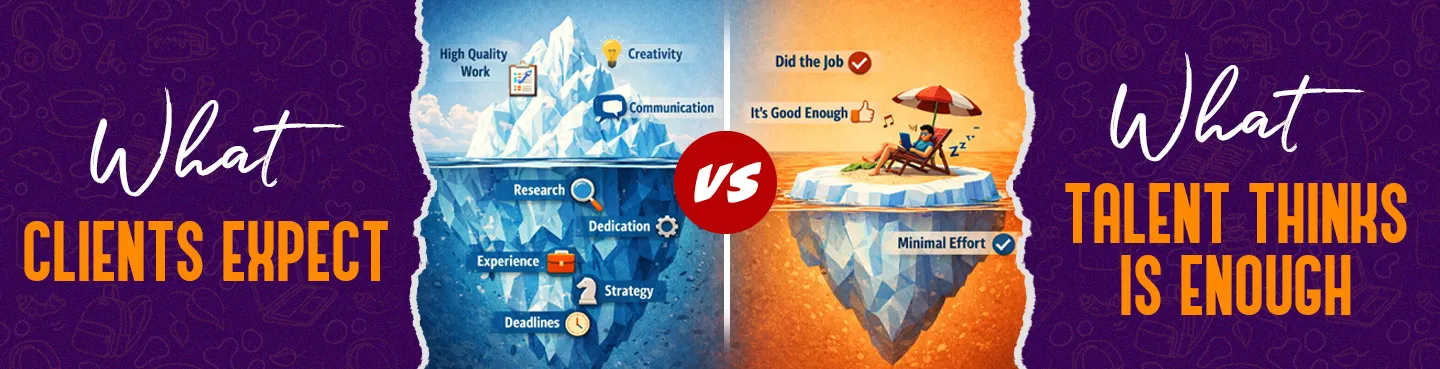





In the bustling boardrooms of London tech firms and Manchester creative agencies, a quiet drama unfolds daily: client expectations vs talent skills. Picture Maria, a mid-level marketing manager at a fintech startup. She hires a fresh graduate with a shiny degree in digital strategy, expecting them to dive straight into crafting AI-optimised campaigns that drive 20% ROI uplift. The new hire, buzzing with textbook knowledge, delivers a solid plan, but it lacks the real-world edge to navigate algorithm tweaks or client feedback loops. This isn’t uncommon; it’s the crux of the skills gap in the modern workforce, where what clients really expect from talent often clashes with what newcomers believe suffices.
Employers in 2026 aren’t just ticking boxes on CVs. Employer expectations in 2026 demand agility amid rapid shifts like generative AI tools reshaping content creation. Clients want talent who can blend creativity with data smarts; think of turning raw analytics into viral LinkedIn threads that convert leads. Yet, many professionals gauge their readiness by qualifications alone, overlooking workforce capability vs qualifications. A 2026 Deloitte survey highlighted this rift: 72% of hiring managers cited talent readiness for business needs as their top headache, far outpacing concerns over formal credentials.
Consider the story of Alex, a project lead at a Birmingham e-commerce giant. He onboarded a team of designers proficient in Adobe Suite, the academic gold standard. But when the client demanded immersive AR product visualisations for a Black Friday push, the gap yawned wide. Client expectations vs talent skills revealed a stark truth: real-world skills vs academic skills rarely align without intervention. The designers could mock up static images, but integrating AR required hands-on experience with tools like Unity or Spark AR; skills the workforce hadn’t prioritised. This skills gap in the modern workforce costs weeks and thousands in rework, underscoring the industry-ready talent shortage plaguing UK businesses.
What clients really expect from talent boils down to three pillars: adaptability, impact, and foresight. First, adaptability; navigating tools like no-code platforms that evolve monthly. Second, measurable impact, where vague “strategic thinking” won’t cut it; clients crave proof via KPIs. Third, foresight to anticipate trends, such as voice search optimisation or ethical AI deployment. Talented hires often think a portfolio of polished projects is enough, but talent readiness for business needs hinges on proving these in live scenarios. Employer expectations in 2026 amplify this, with 65% of FTSE 250 firms now using skills-based assessments over degrees, per a recent CIPD report.
The skills gap in the modern workforce isn’t just a hiring gripe; it’s a growth blocker. Companies face an industry-ready talent shortage, with PwC estimating a £20 billion productivity hit across the UK economy by 2027 if unaddressed. Workforce capability vs qualifications tells the tale: a Cambridge engineering grad might ace theory but falter in agile sprints, while a self-taught coder thrives on practical briefs. Bridging the demands of bridging the skills gap in companies through targeted upskilling, micro-credentials in AI ethics or prompt engineering, delivered via platforms like Coursera for Business.
Enter workforce transformation strategies. Forward-thinking firms like a Leeds-based logistics leader are flipping the script with “skills bootcamps”; four-week intensives pairing juniors with client projects. The result? Client expectations vs talent skills aligned, slashing onboarding time by 40%. Others embed mentorship pods, where veterans shadow newbies on live pitches, fostering talent readiness for business needs. What clients really expect from talent becomes reality when bridging the skills gap in companies prioritises experiential learning over rote qualifications.
Ultimately, employer expectations in 2026 signal a sea change: workforce capability vs qualifications must evolve. Talent can’t just “think it’s enough” to graduate and grind; clients demand proactive hustlers who bridge theory to triumph. Bridging the skills gap in companies via bold workforce transformation strategies isn’t optional; it’s the differentiator in a talent-starved market. As one agency director quipped, “We don’t hire resumes; we hire results.” Time for the workforce to catch up.