
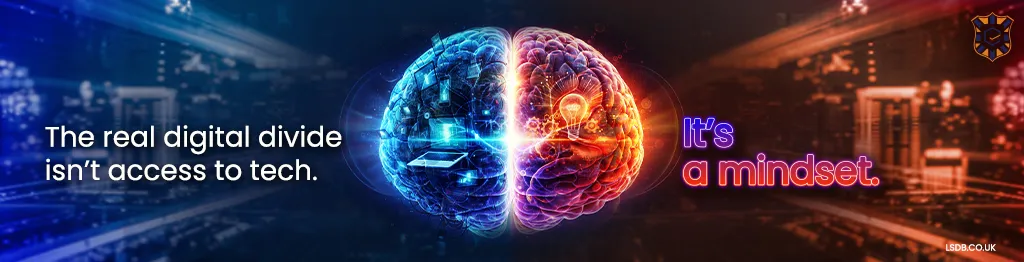





The real digital divide isn’t about who has the latest gadgets or fastest internet; it’s about mindset. In today’s fast-evolving world, where technology seems to reshape everything overnight, the biggest barrier is the mental shift required to thrive in a digital-first environment. It’s this often overlooked gap, the attitudinal and cognitive readiness, that defines whether individuals and organisations succeed or struggle. To bridge this, digital mindset training has emerged as a crucial solution for overcoming the digital divide.
Imagine two employees in the same company offered access to identical technology. One embraces the change eagerly, experimenting with new tools and finding ways to boost productivity. The other resists, clings to familiar routines and misses out on the immense value digital transformation can bring. The difference isn’t their hardware; it’s their mindset. This story echoes across industries, revealing that online training programmes focused exclusively on technical skills miss the mark if they don’t address the underlying digital mindset.
The journey towards digital skills development begins with recognising that technology is an enabler, not a standalone fix. For organisations, investing in digital mindset training is as important, if not more so, than rolling out new software. It’s about fostering curiosity, resilience, and adaptability, key traits that empower employees to evolve along with digital tools. Companies that prioritise this mindset shift see more engaged teams and achieve true workplace transformation through training, rather than just incremental upgrades.
To illustrate, take the story of a mid-sized retail company navigating the shift to e-commerce. They launched several online training programmes to equip their staff with technical know-how, handling CRM systems, analytics dashboards, and online marketing platforms. Despite this, adoption lagged. The breakthrough came when leaders introduced comprehensive digital mindset training sessions, weaving in storytelling, peer learning, and exercises that challenged assumptions around failure and risk-taking. Employees began to see digital not as a threat but as an opportunity. Within months, the company not only increased online sales but also transformed its customer service approach, all thanks to cultivating a new mindset.
This example highlights the necessity of integrating mindset development in professional development online. Too often, digital learning focuses on functional tasks: how to use software or operate devices, while ignoring the psychological and cultural shifts required to innovate consistently. Digital skills development without complementary mindset work risks producing workers who can do tasks but lack the drive to pioneer or improve.
The good news is that overcoming the digital divide through mindset is entirely possible with the right frameworks. Digital mindset training modules often include components like growth mindset coaching, design thinking, and agile methodologies. These encourage learners to embrace ambiguity and ongoing learning rather than chase one-time proficiency. In this way, digital readiness becomes less about having the ‘right’ answers and more about being comfortable seeking them collaboratively.
Such training is a cornerstone of leadership training in the digital age. Leaders today face unprecedented complexity, from AI integration to remote collaboration and must cultivate environments that nurture adaptability. They benefit from online training programmes that emphasise the digital transformation mindset, helping them to model experimentation and resilience. When leaders embody this mindset, it cascades through their teams, enabling authentic workplace transformation through training.
An important facet of this evolving landscape is that digital skills development no longer centres solely on technical expertise. Skills like emotional intelligence, cross-cultural communication, and creative problem-solving now rank equally high. This broad approach fuels upskilling for the future of work, preparing employees not only for today’s tools but tomorrow’s unknown challenges. Companies focusing narrowly on technical training risk missing this vital dimension, limiting their workforce’s potential.
The rise of professional development online has made these rich learning experiences more accessible than ever. Learners can engage in immersive, interactive modules anytime, anywhere, ideal for busy professionals juggling remote work and shifting priorities. As the future of digital learning evolves, we’re seeing a blend of AI-driven personalisation, social learning communities, and real-time feedback that nurtures not just skills but mindset. This holistic approach transforms education from a box-ticking exercise to a meaningful journey of empowerment.
Look at the healthcare sector, where digital tools are revolutionising patient care and operations. Clinics adopting a digital mindset training alongside conventional upskilling report stronger collaboration across departments and faster adoption of telehealth solutions. This combination of technical and mindset readiness means healthcare workers feel more confident experimenting with new ways of delivering care, crucial for a sector often resistant to change.
For businesses hoping to thrive in an increasingly digital world, the lesson is clear: closing the gap isn’t simply a matter of upgrading infrastructure or rolling out online training programmes. It requires investing in digital mindset training that shifts how people think about technology and their role in a digital ecosystem. This mindset is the foundation for overcoming the digital divide in any context, whether it’s entry-level workers, seasoned professionals, or leadership.
When organisations commit to workplace transformation through training that includes mindset development, they unlock a new level of agility. Employees become lifelong learners rather than one-time trainees. They start viewing change not as a challenge to endure but as a catalyst for growth. This subtle yet powerful shift drives innovation, resilience, and a competitive edge that purely technical training cannot deliver.
To give this shift practical shape, many companies now embed digital mindset training within their broader professional development online offerings. They create pathways where learners can progress through technical skill-building, mindset coaching, and leadership training that focuses on the holistic demands of the digital era. This integrated strategy ensures that upskilling for the future of work isn’t fragmented but a cohesive journey.
The power of this approach lies in what it signals culturally. It says that technology adoption is not a checkbox but a continuous, collective evolution. It announces that every team member’s mindset matters, because technology alone will not transform outcomes; people will. This underlines why investing in leadership training in the digital age is vital. Leaders must champion this mindset to sustain momentum and embed it deeply within organisational DNA.
In conclusion, the real digital divide isn’t the shiny gadgets or internet speeds; those are easier to fix. The true divide is a mindset gap that determines whether individuals and companies can keep up with a world that changes by the hour. Digital mindset training is the bridge to overcoming this digital divide, combining emotional agility with skills acquisition. It forms the backbone of workplace transformation through training, the gateway to the future of digital learning, and an essential element in upskilling for the future of work.
By embracing a digital transformation mindset and embedding it alongside digital skills development and leadership training in the digital age, organisations can not only adapt but also flourish. The digital era demands nothing less than a fresh perspective on learning, one that balances technology with the human spirit. This fresh mindset is the currency that will unlock potential in the years to come.