
Identify
Understand exactly where quote comparison broke down and why manual spreadsheets couldn't keep up

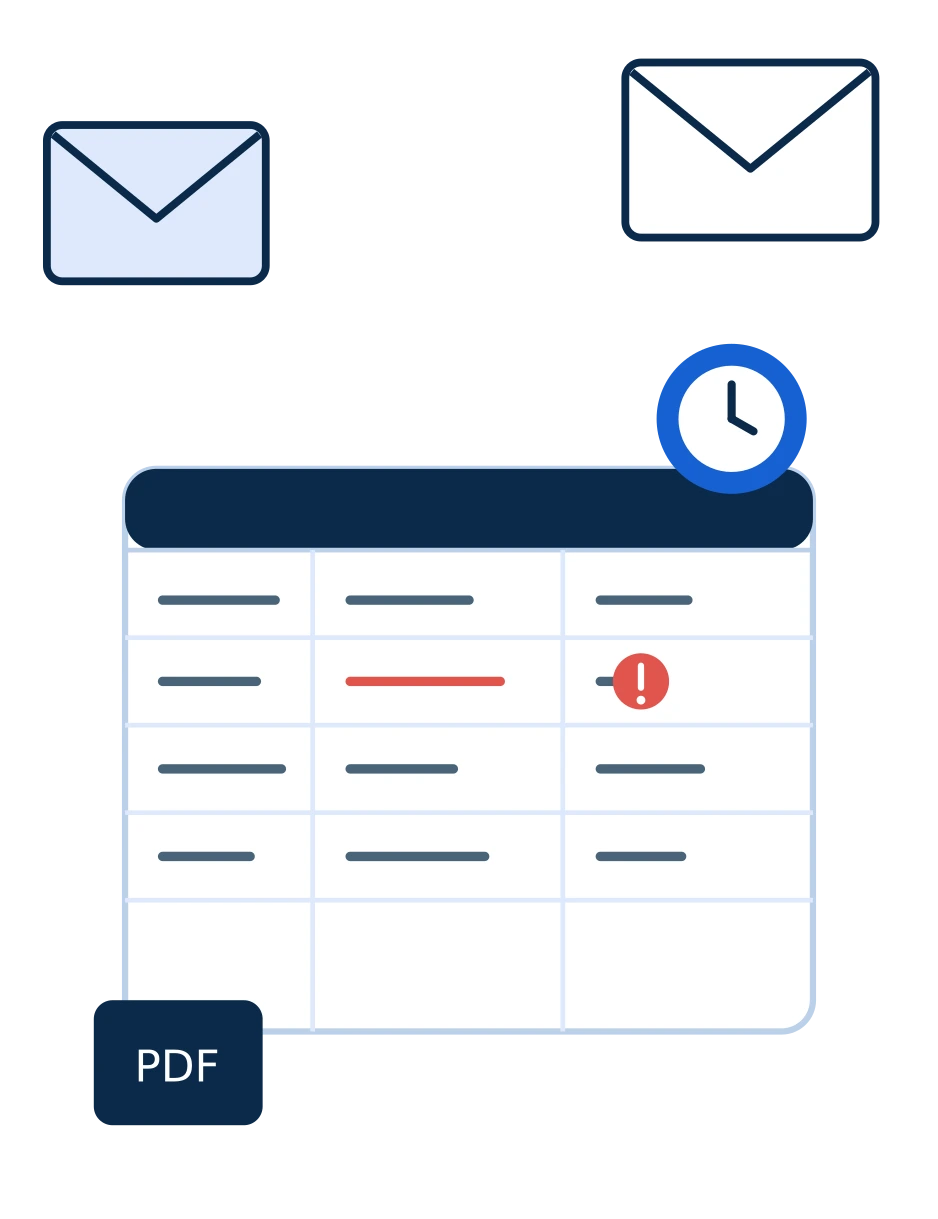
Mahindra sources raw materials, machined parts, and packaging from a supplier base of several hundred vendors across categories - metals, electronics, plastics, and specialty components, to keep multiple production plants running. Getting a request for quotation from a raw requirement to an awarded vendor is what keeps parts flowing to the line on schedule.
As RFQ volume grew alongside new product lines, the cost of that process, transcription errors, undocumented awards, no spend visibility, kept accumulating. The vision behind fixing it properly, though, was still strong.

The challenge wasn't just comparing quotes faster - it was making every RFQ, from every vendor, in whatever format it arrived, land in one trustworthy comparison with a documented reason behind every award, without forcing every supplier onto a single portal.
We were brought in to design a system that would work the way procurement actually sources parts, not the way a typical enterprise workflow assumes every vendor behaves.
Understand exactly where quote comparison broke down and why manual spreadsheets couldn't keep up

Build an AI-driven RFQ platform that fits how procurement already sources parts today

Make it structurally impossible for an award to go through without a documented approval

Support every vendor format and give leadership full spend and supplier visibility
Procurement uploads or forwards a raw sourcing requirement - a spec sheet, drawing, or free-text request and an LLM pipeline extracts item specifications, quantities, target dates, and required certifications to draft a structured RFQ automatically.
The result: an RFQ goes out in minutes instead of the hours it used to take to assemble by hand.
Onboarded vendors quote through a structured supplier portal. Everyone else can keep replying by email or PDF exactly as before - an AI parsing pipeline extracts price, currency, lead time, and terms and normalises them into the same schema.
No award can be confirmed without routing through approval based on configurable thresholds - spend amount, category, or deviation from the lowest bid. If it falls outside the rule, it's blocked from auto-approval outright.
Every vendor's quote for an RFQ shows up side by side, normalised pricing, lead time, and a rolling quality score with outlier prices and missing fields flagged automatically before a decision is made.
Procurement leadership now has a complete, immutable audit trail for every RFQ that has moved through the platform.
From a raw sourcing requirement to an awarded, fully audited vendor - every stage recorded, one hard gate before any award is confirmed.

An LLM reads the raw requirement and drafts a structured RFQ automatically.
LLM extraction
Vendors quote through the supplier portal, or keep replying by email or PDF.
Two intake paths
Price, currency, lead time, and terms are extracted and mapped into one comparable record.
LLM parsing
The award routes for approval based on configurable spend and category thresholds.
Hard block until approved
Every RFQ, quote, and approval is logged and visible on live procurement dashboards.
Full spend visibilityWe used to spend most of a week just getting quotes into a format we could actually compare. Now that happens before lunch, and I trust the numbers because nobody re-typed them by hand.
Mahindra
The dashboard flags outlier pricing automatically now. Before, we would only find out a quote was inflated after we had already awarded it.
Mahindra
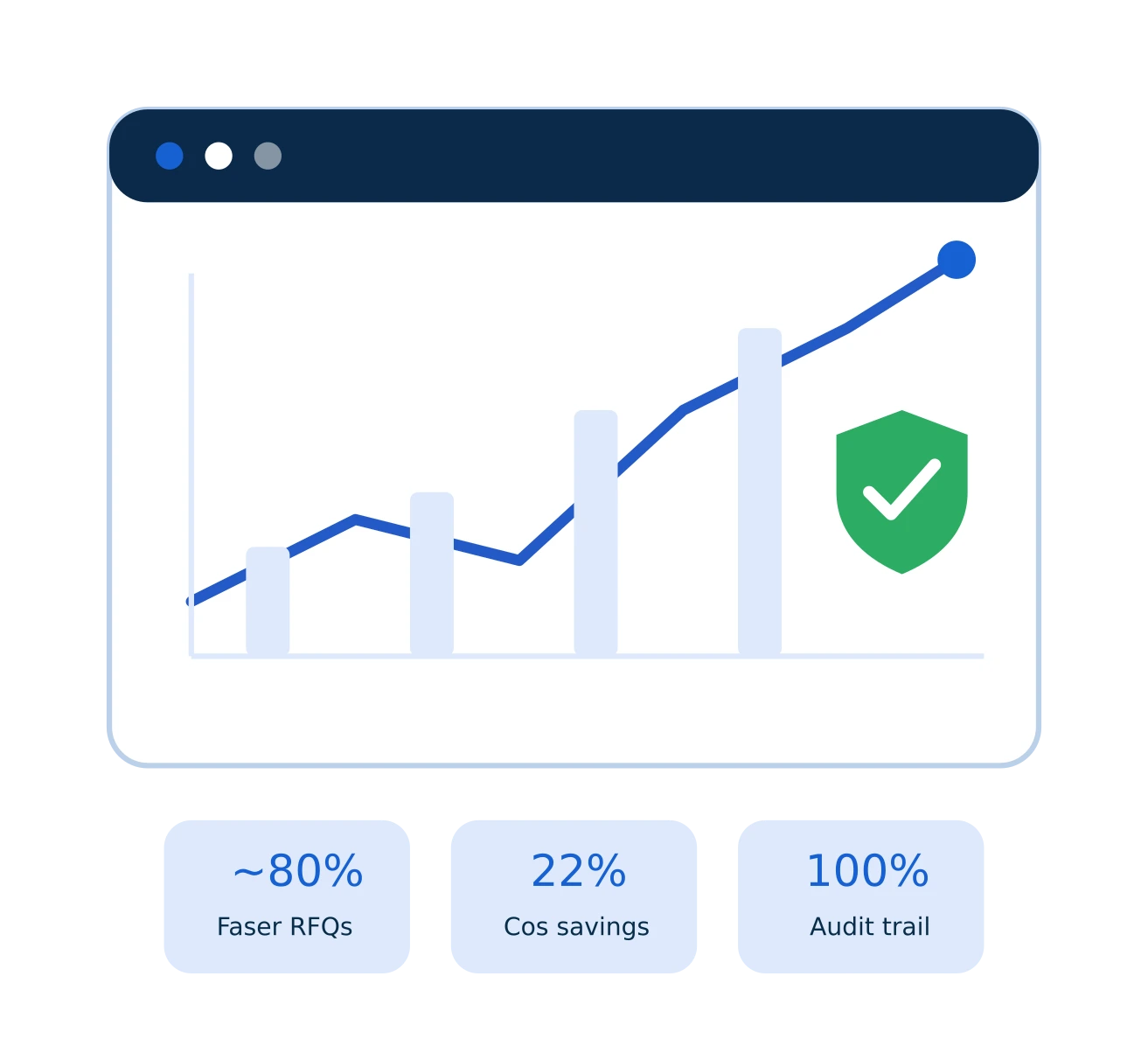
~80%
Faster RFQ turnaround
Days down to hours
22%
Avg. cost savings
Vs. prior quote cycles
100%
Audit trail
Every RFQ, quote, and approval recorded
0
Vendors excluded
Portal or email — every format accepted
It's a platform that uses an LLM to draft, dispatch, and parse request-for-quotation workflows automatically — turning a raw sourcing requirement into a structured RFQ, collecting vendor quotes in any format, and normalising them into one comparable record.
Every vendor replied in a different format — a PDF, a spreadsheet, or prices typed into an email — so quotes had to be re-typed by hand into a comparison sheet. That manual step introduced transcription errors and meant sourcing decisions took days to close.
An LLM reads the raw requirement — a spec sheet, drawing, or free-text request — and extracts item specifications, quantities, target dates, and required certifications to draft a structured RFQ, then suggests a vendor shortlist based on category history.
They can keep replying by email or PDF as usual. An AI parsing pipeline extracts price, currency, lead time, and terms from the document and maps them into the same schema as portal submissions, so no vendor is excluded from the comparison.
The LLM-based pipeline is trained on real historical RFQs and vendor quotes across categories, so it can extract pricing, MOQ, and terms reliably even from unstructured, inconsistently formatted documents rather than clean, templated ones.
Sourcing decisions route for approval automatically based on configurable thresholds — spend amount, category, or deviation from the lowest bid — and every approval, rejection, and comment is timestamped, giving procurement a defensible audit trail for every award.
Every RFQ, quote, and award rolls up into live dashboards covering spend by category, RFQ cycle time, and per-vendor scorecards for pricing trend and on-time delivery — visibility that didn't exist when data lived across spreadsheets and inboxes.
Yes. Vendors can keep quoting by email or PDF exactly as before — the supplier portal is an option for a faster, structured submission, not a requirement to participate in an RFQ.
Incomplete quotes are flagged automatically and routed back for clarification, so a vendor with a missing MOQ or lead time doesn't silently skew the comparison or get lost in the queue.
By designing around how procurement actually works — two intake paths so no vendor is excluded, configurable approval rules, and a full audit trail — rather than forcing every vendor onto a single portal or generic workflow.